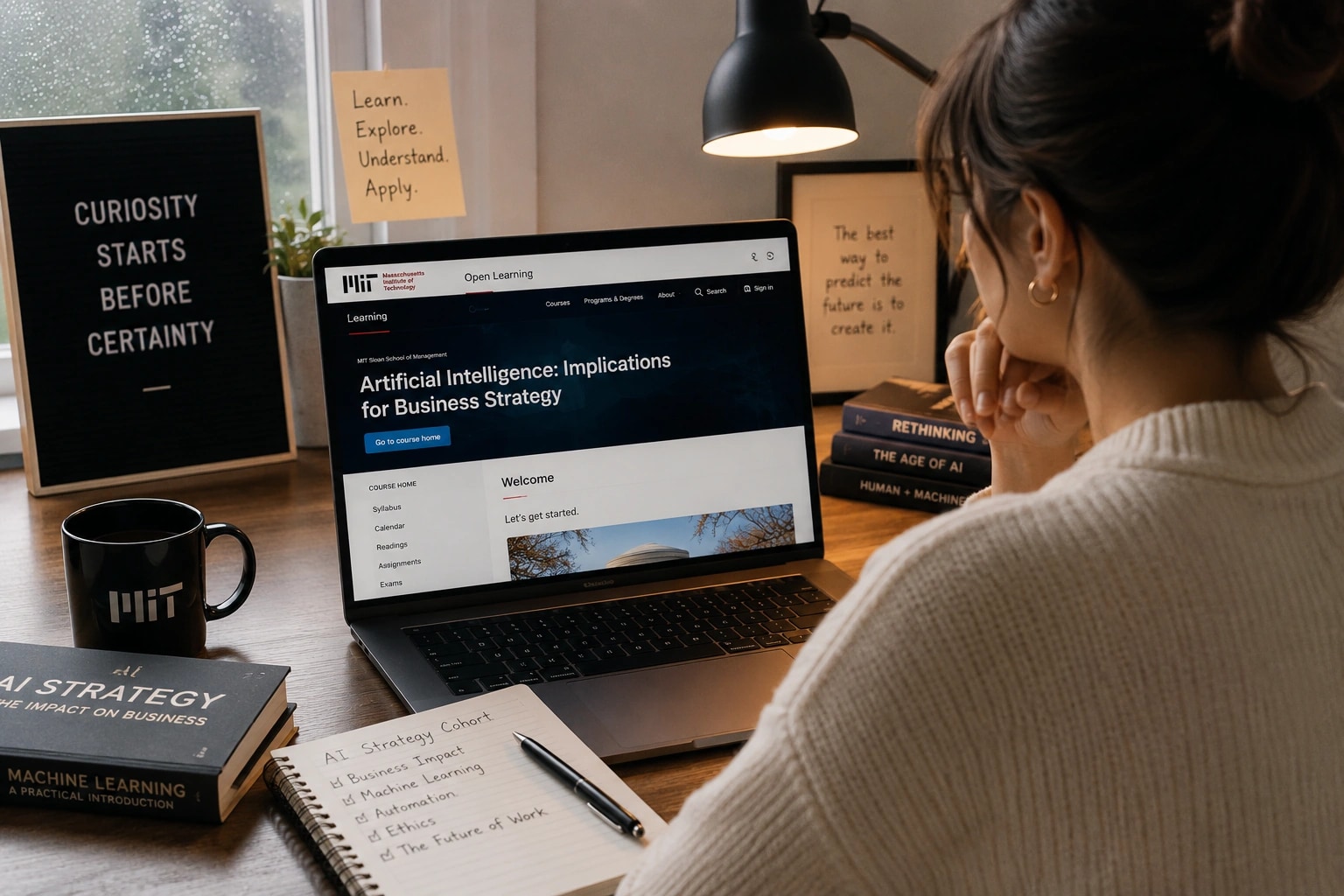
In 2018, I signed up for an AI strategy cohort at MIT.
At the time, most of the conversations were centered around machine learning, data, automation, and the long-term implications of AI across industries. It came from curiosity more than certainty.
Earlier this year, I wrote about curiosity as a competitive advantage in the AI era and why I believe the people adapting best right now are not necessarily the ones with all the answers, but the ones willing to stay open, experiment, and engage with change before they feel fully ready. You can read that piece here: https://x.com/monitalan/status/2007104885674873052
Prior to signing up to the course, I was already spending time in emerging technology ecosystems and trying to understand how technological shifts reshape industries, communication, and opportunity. AI felt important, but if I’m honest, I don’t think most of us fully understood how quickly it would move from research labs and enterprise conversations into everyday life.
Five years later, AI is sitting in people’s pockets.
Not as a distant concept, but as something millions of people now interact with directly through their phones, work tools, search engines, and daily workflows.
I don’t think many people predicted the speed of adoption we’re seeing now.
What surprised me even more is how emotional this transition has become.
The conversations around AI are no longer only technical. They’re deeply human.
I’ve heard excitement, fear, curiosity, resistance, optimism, and exhaustion — sometimes all in the same conversation.
I’ve seen people become energized after realizing AI could help them brainstorm ideas, organize workflows, or unlock creativity. I’ve also seen anxiety from professionals wondering whether they’re falling behind or whether AI will fundamentally reshape the careers and industries they’ve spent years building.
And then there are the barriers.
Some are practical:
- lack of training
- lack of access
- information overload
- uncertainty around where to begin
Others are emotional:
- fear of looking uninformed
- fear of replacement
- fear of moving too slowly
- fear of moving too quickly
There are also larger structural concerns that we can’t ignore. As AI adoption accelerates, so do conversations around energy usage, water consumption, infrastructure strain, environmental impact, and who ultimately bears those costs. Across the United States, communities are increasingly pushing back against the rapid expansion of AI data centers because of concerns around electricity usage, water access, noise, land use, and long-term community impact. A recent Time feature highlighted the growing movement of people questioning the environmental and societal tradeoffs behind the AI boom.
These concerns matter.
Because AI adoption is not happening in a vacuum. It intersects with economics, infrastructure, labor, education, policy, sustainability, and access.
I’ve also become increasingly aware that access to AI knowledge is not evenly distributed. The people and organizations with the greatest need for support are often the ones with the least access to trusted guidance, education, or experimentation spaces.
That gap matters.
Because technology adoption is never just about tools. It’s about confidence, understanding, and opportunity.
I consider myself both an optimist and a realist when it comes to AI.
I’m optimistic because I’ve seen firsthand how AI can unlock creativity, accelerate learning, expand access to knowledge, and help people rethink what’s possible. I’ve watched hesitant teams transform their thinking after one workshop. I’ve seen people discover new opportunities simply because they finally felt confident enough to experiment.
But I’m also realistic.
AI will create disruption.
It will reshape industries.
It will challenge existing systems, workflows, and assumptions.
That’s why I believe practical education matters so much right now.
Not hype. Not fear. Not endless predictions about the future.
Practical understanding.
Because the organizations and communities that navigate this era best will not necessarily be the ones with the most advanced technology. They’ll be the ones most willing to learn, adapt, ask questions, and help people move from curiosity to confidence.
Looking back, I’m grateful I followed that curiosity in 2018.
Not because it gave me certainty about the future.
But because it taught me that understanding technological change starts by being willing to engage with it before all the answers exist.